Is refacing kitchen cabinets worth it over replacing them
Decide if kitchen cabinet refacing makes sense for your home by reviewing the required materials, layout changes and when to replace completely.
 Prepared by Fiona Eckhart
- 7 min. to read
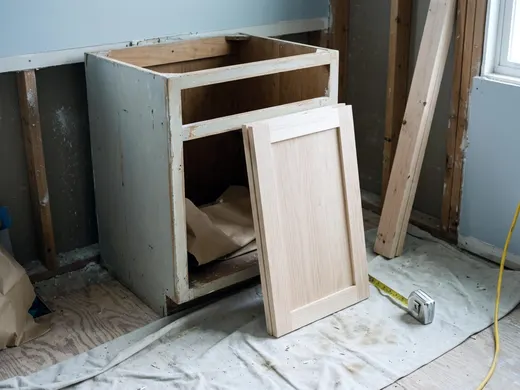
Kitchen cabinet refacing makes sense if your boxes are sound and you like your exact layout. It rarely makes sense if you plan to move walls. You save the hassle of a full tear-out. The tradeoff is getting a cosmetic update rather than better storage.
What refacing changes and what stays
A typical kitchen cabinet refacing job leaves the main structure exactly where it is. A professional crew replaces the visible parts like hardware, drawer fronts and doors. They leave the existing cabinetry in place.
The empty boxes then get a new skin to match the new doors. The materials used to cover the existing cabinet surfaces are genuine wood veneers and decorative laminate. The result looks like a brand new kitchen from the outside. You choose a different color or door style without ripping out your countertops or plumbing.
The contractor will measure every single opening precisely, and the doors are typically made to fit your frames. This means you can change the overlay style. Older cabinets often show part of the frame around the door. Modern refacing can use larger doors that cover the entire face frame for a cleaner look.
Signs your cabinet boxes are worth keeping
Refacing only works on a solid foundation. You need to inspect your cabinet boxes before you commit to the project. Look inside the sink base first. A leaky pipe can ruin the floor of a cabinet over time.
Press firmly on the bottom panel and the side walls. The wood should feel rigid and dry. Any soft spots mean water damage has compromised the material. Swollen particleboard may not hold new screws for heavy doors, so ask the contractor whether boxes in that condition need replacing.
Check the frames around the openings next. They need to be perfectly square and tightly fastened to the walls. A cabinet that pulls away from the wall under the weight of a stone countertop can be a safety risk, so have a qualified pro check it. Fixing loose boxes may cost enough in labor to justify buying new cabinets instead.
When the layout calls for new cabinets
A successful refacing project assumes you like how your kitchen functions right now. The sink, stove and refrigerator will stay in their current spots. You cannot move a refaced cabinet to the other side of the room. You also cannot easily add custom storage inserts if the boxes are an odd size.
Many older kitchens have narrow walkways or a severe lack of counter space. You might want to remove a wall or add an island, and those major shifts demand new cabinetry. Knowing the standard kitchen cabinet sizes helps you plan a fresh layout. Building your new floor plan around standard boxes keeps the material costs predictable.
Sometimes you only need a minor adjustment. A good refacing company can occasionally add one new matching cabinet to extend a run. They might also modify a base cabinet to fit a larger modern dishwasher. Ask about those small tweaks early to see if a hybrid approach works.
Refacing versus refinishing kitchen cabinets
Homeowners often confuse refacing with refinishing kitchen cabinets. Refacing discards your old doors and replaces them with new ones. Refinishing keeps your existing doors and simply changes their color.
Refinishing usually means sanding down the wood and applying fresh paint or stain. This path works well if you love your current door style but want a fresh look. The doors need to be real wood in excellent condition. Refinishing a damaged or peeling synthetic door may not yield a smooth finish.
Refacing generally costs more than refinishing because you buy physical materials like new hardwood doors and matching veneer. Refinishing is mostly a labor cost. If your doors are cracked or hopelessly dated, refacing is the better choice. If the doors are high-quality solid oak and you just hate the dark stain, refinishing makes better sense.
Painted cabinets in a home built before 1978
Older kitchens hide specific risks in their layers of paint. The federal government banned lead paint for residential use in 1978. Homes built before that year may have lead paint somewhere on the walls or the original cabinets.
The EPA requires anyone paid to disturb painted surfaces in homes built before 1978 to be certified under its lead renovation rule. Refacing or refinishing older painted cabinets generates dust. A certified firm must follow lead-safe work practices that limit lead dust spreading through your house.
There is a specific exception to this rule. The EPA exempts minor work that disturbs six square feet or less of paint per room inside a home built before 1978. Whether a refacing job stays under that limit depends on how much painted surface it disturbs, so ask the contractor. Always ask a contractor to show their certification before they start sanding, and ask your local building department about other rules.
Questions to ask a refacing company
Treat a refacing consultation just like any other contractor bid. You want a clear understanding of the materials and the timeline. Ask how long the job will take and get the dates in writing.
Ask exactly what material they use for the doors, such as genuine wood veneer or decorative laminate. Ask how they prepare the existing boxes for the veneer. Conestoga Wood's guide says to clean the end panels and face frames and scuff the surfaces that will receive veneer.
Find out who handles the trash removal. The project will generate a large pile of old doors and hinges. The contractor should include disposal in their written bid. You should also check what kind of warranty covers the adhesive failing over time.
The process of preparing a kitchen for refacing
Preparing your kitchen for a refacing project takes an afternoon of organizing. The installation crew needs full access to the cabinet frames. You must empty every single cupboard and drawer before they arrive. The workers will reach inside to attach new hardware and secure the frames.
Box up your dishes and store them in the dining room or a spare bedroom, and clear off the countertops completely. The crew needs flat surfaces to arrange their tools and sort the new hinges. Move small appliances like your toaster or coffee maker to another room. You can set up a temporary kitchen station in the living room to survive the week.
Tape plastic sheets over the doorways to contain the mess. Even with careful work, cutting veneer and sanding frames creates fine dust. Cover your furniture in the adjacent rooms. Ask the crew whether to shut down your heating and cooling system while they sand, so the blower does not pull dust into your ductwork.
Dealing with cabinet interiors and glass doors
Refacing changes the exterior, but the inside of your cabinets remains the original color. If your boxes are natural maple inside, adding white doors creates a stark contrast every time you reach for a glass. Many homeowners accept this difference to save money.
You can pay the contractor to apply veneer to the interior shelves and walls. This can add labor hours to the bill. A cheaper approach is to paint the interior yourself before the new doors arrive. Painting the shelves gives you a uniform look for the price of a gallon of paint and a weekend of hard work.
Glass accent doors require finished interiors to look right. If you want a display cabinet with glass inserts, the inside must match the outside. The crew will install matching laminate or veneer inside that specific box so the display looks entirely finished.
Upgrading the hardware during a refacing project
New doors require new hardware. Refacing gives you solid doors without any pre-drilled holes. This allows you to change the entire aesthetic of the room. You can switch from small round knobs to long bar pulls with zero patching required.
Hardware placement dictates how you interact with your kitchen daily. Installers will ask where you want the handles positioned. Test a few locations before they drill. Lower handles on upper cabinets make it easier for everyone to open them.
You can also upgrade the internal hinges. Many older cabinets use exposed hinges. Ask whether the refacing package includes new hinges, such as hidden European hinges. Adding a soft-close feature stops doors from banging against the fresh veneer.
How refacing fits into a wider kitchen plan
Most homeowners want new countertops, an updated sink or a fresh tile backsplash at the same time. The order of work matters.
You should figure out your kitchen remodel priorities before a contractor orders the veneer. Ask your contractor whether the countertops should go in before the new doors are hung. Installers can easily scratch a brand new door while wrestling a heavy slab of quartz into place.
Flooring updates introduce another sequencing challenge. If you are tearing out old tile to lay hardwood, the floor height will change. The refacing contractor needs to know the final floor height so the new doors do not scrape the ground.
A cosmetic update still demands careful financial planning. You need to know how to build a renovation project budget before signing a contract. Refacing is often less costly than new cabinetry, but adding stone counters, a tile backsplash and new lighting quickly pushes the total higher.
More for this project
Standard kitchen cabinet sizes to plan your layout around
Plan your layout using the standard cabinet sizes for kitchen renovations and learn exactly how base, wall and tall units fit together along a wall.
How to sketch your kitchen plan before you meet a designer
Using a free kitchen design tool lets you check clearances before hiring a pro. Learn how to measure your room and map out a layout that actually works.
11 decisions to settle before your kitchen remodel starts
Make your kitchen remodel a success by settling these eleven decisions before the work starts, from cabinet layout to permits and lead safety.